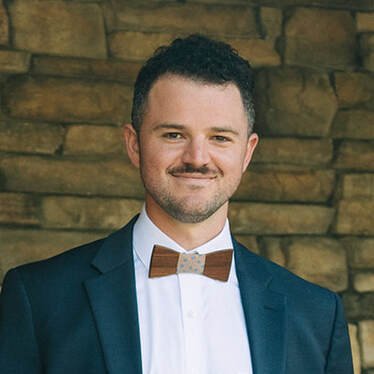
Cameron Zamot
Questionnaire Responses
1. Public Employee Living Wage Commitment: As a county chapter of the Progressive Caucus of the North Carolina Democratic Party, we require all candidates seeking our endorsement to pledge to advocate for and ensure that public employee salaries meet or exceed a living wage. Please read and sign the pledge here before continuing your endorsement application: https://www.pcncdp.org/pledge. Once you have signed the pledge, please indicate doing so below:
a. [I have signed the Public Employee Living Wage Pledge!]
b. [I have chosen not to sign the Public Employee Living Wage Pledge at this time.]
In addition to the Living Wage Pledge, do you support a living wage for all part-time and seasonal city workers, and believe the city should cover healthcare premium costs? Why or why not?
Absolutely. The City should be doing everything in its power to care for the people who make Raleigh a better place. Competitive wages and strong benefits lead to lower turnover, greater institutional knowledge retention, and more efficient delivery of City projects.
When City employees aren’t satisfied with pay or benefits, they leave for other employers that offer them. That turnover directly hurts the City’s ability to deliver projects on time and within budget.
Do you support placing limits on the size of campaign donations for candidates running for Raleigh City Council? If so, what should be the maximum amount for all categories of donations? Additionally, have you accepted contributions from the real estate industry or its executives? If yes, from which entities and why did you accept those contributions? Please explain your position and reasoning.
This is my first campaign and I’m trying to run it very lean. I will raise around $15,000 in total. If I had to put a number on an upper limit for all campaigns, I’d say $40k seems like more than enough to run a good campaign. After all, it’s municipal office in a mayor-manager system. It’s not like we’re the Los Angeles or Chicago city council.
I have not accepted any contributions from the real estate community.
What is your overall strategy to increase housing supply while maintaining long-term affordability and preventing displacement?
Raleigh has already done a lot to improve housing supply. I would continue many of the existing efforts, while being mindful to preserve and enhance Raleigh’s natural beauty.
I once lived at Pullen Station Lofts. These small 250 sq. ft. units were exactly what I was looking for at that point in my life. We need more of this style of housing. By changing City policy to incentivize developers to build this type of housing, we can increase the housing supply in the city, especially near groceries and other daily necessities.
On the other side of the spectrum, we do need more high-rise luxury apartments. These serve a key purpose, opening up the housing chain like musical chairs. Here’s an example of how that could look:
An older couple, empty nesters, downsize out of their big suburban home to live in a high-rise apartment closer to amenities in the city. This enables a young family to move out of their townhome into a bigger house for the kids, which then opens up a more affordable townhome for a young professional or student. That young person may have moved out of a small apartment or ADU (auxiliary dwelling unit) which would then provide an affordable space for someone to live.
We also need renter advocacy. So many people in Raleigh are renters, but there is no formal “Renters Commission” to organize and advocate for renters at the Council level. I myself am a renter and would love to see more formal advocacy at the city government level.
What requirements should the City impose on large developers to ensure they contribute to affordable housing, sidewalks, transit access, schools, and other community infrastructure?
Part of my vision for Raleigh is making sure residents have walkable access to green space, grocery stores, and healthcare. Developers can play a major role in bringing these amenities closer to where people live, and help to reinvest the residents’ wealth back into the community, rather than exporting it to the nearest big-box store.
Whenever there is an opportunity for mixed-use residential and retail development, we should take it. Vibrant streetscapes often mean active storefronts. Small grocery stores can be integrated into these projects to serve nearby neighborhoods. When people can walk to meet their daily needs, and quality of life improves.
Developers should be required to include green space in their projects, proportional in size to the size of the development. Whether this is accomplished through small parks, green roofs, living walls, or green stormwater infrastructure. Requiring developers to help deliver green space adds value for the entire community. Green stormwater infrastructure, in particular, can both beautify streetscapes and reduce pressure on our stormwater system as storms become more severe.
I’m open to other ideas as well, but these conversations should be collaborative. Developers are allies with the economic capacity to help make Raleigh a more appealing place to live, work, and play.
What zoning or land-use changes do you support to reduce sprawl, preserve naturally occurring affordable housing, and promote transit-oriented development?
On Council, I will advocate for mixed-use zoning in and near existing neighborhoods, limited to 3-7 stories in height and synergetic with the character of the neighborhood. I see no need for 20-40 story high-rise development in Raleigh — in fact, I believe that high-rise development erodes the character of neighborhoods.
Neighborhood-scale development is how we can build walkable neighborhoods all over Raleigh.
Small mixed-use development is a vital part of building a more walkable city. Not all residents live near existing economic hubs, which means we need to bring those amenities to them. My coffee shop, The Bike Library, is located in a seven-story development in Boylan Heights. It serves not only the residents in the building but also the neighborhood as a whole. I see customers walk in from townhomes on South St., single-family homes on Dorothea Drive, and apartments directly above my
shop. Next door, there’s a yoga studio. There’s also a bakery around the corner. We need more mixed use spaces in neighborhoods: grocery stores, bodegas, cafes, healthcare.
Residents in North Raleigh should still be able to enjoy the quality of life that comes from a walkable or bikeable neighborhood, but it’s unreasonable to expect they’ll bike downtown for their groceries. Council has the power to enable this small-scale commercial development near residential areas. Working with developers to ensure thoughtful, useful, and synergetic tenants occupy those spaces will be key to building vibrant communities.
Parking reform (in effect, land reform) is a hard topic to broach, but that’s one of the burdens of City leadership I’m willing to take on. Consolidating parking in decks and opening up curb space for multi-use paths, protected bike lanes, and bus lanes is a way to use that precious real estate to benefit more people than just those who need convenient parking.
A slight barrier to driving downtown may actually increase downtown economic activity, if paired with an improved transit system. If we give people more reasons to use transit, we’ll likely see ridership increase. When ridership increases, we have a reason to dedicate more funding to Transit. When we dedicate more funding, facilities and service improve, and we see more ridership.
What role should public investment play in preserving existing affordable housing and creating new units, and how should these investments address climate risks?
Directly subsidized housing is well-intentioned, but it is one of the most expensive ways for the City to address housing affordability. The amount of public money required per household is high, which limits how many residents the City can realistically help.
To be certain: the City should continue to provide subsidized housing. I believe Raleigh can help far more people, though, by enabling different types of housing to be built near existing amenities.
In a previous question, I mentioned my experience living at Pullen Station Lofts. Developments like that are relatively affordable, yet they are difficult to permit and build under current rules. Much of the “missing middle” housing that is built in Raleigh is relatively expensive. $1M townhomes are great, but we also need new developments with three-figure monthly rent. These developments should be prioritized near daily necessities: Groceries, healthcare, greenspace. Not tucked next to I-40.
If Council approves these kinds of developments, we will see more naturally occurring affordable housing without significant taxpayer cost. This approach allows limited public dollars to go further while making a meaningful difference for people who need housing the most.
Do you support placing a bond referendum on the Raleigh ballot to fund solar installations on public buildings and reinvest savings into public services and worker pay? Why or why not?
Placing solar panels on public buildings can make sense if it’s done intentionally, but I’d rather see a requirement that solar panels are installed on all new buildings. With so much new development happening in Raleigh, that’s a relatively easy policy change and far more cost-effective than retrofitting older structures. Retrofitting often triggers expensive main panel upgrades or reveals other incompatibilities.
Overall, I’m strongly pro-solar. I previously worked in the solar industry and am a big fan of the technology. There are plenty of misconceptions about solar, but it’s often a smart investment when panels are tied into the grid and enabled for Net Energy Metering, which feeds energy back and reduces strain on the broader system.
That said, our funds are finite, and I’d rather prioritize the harder, higher-impact work. Investing in better transit and bike/ped connectivity will do more to reduce greenhouse gas emissions than solar retrofits. It will also result in additional positive impacts, like fewer Vehicle Miles Traveled, less emissions, and the many other negative externalities of car dependence; from tire microplastics to the psychological toll of sitting in traffic.
What actions will you take to improve public transportation, address climate impacts in vulnerable neighborhoods, and support equitable economic development for workers and small businesses?
Right now, active transportation (bus, bike, pedestrian, scooter) is treated as second-rate to car-based travel. That’s a mistake. A robust transportation network is critical to Raleigh’s success as it continues to grow. It may not always be sexy, but enabling more travel options is the key to keeping our city beautiful and livable over the coming decades.
Owning a car is expensive, and when it’s the only convenient and safe way to get around, that burden falls hardest on low-income residents. Buses that run late or don’t show up, shelters that leave riders standing in the rain, and bike lanes that don’t connect or suddenly dump riders into traffic all show where the City is falling short and where we can do better.
One clear example of how transit is deprioritized is the lack of a direct bus from Downtown Raleigh to the Lenovo Center. That is a solvable problem, and fixing it would benefit many residents and relieve congestion around this area of town. It would be one of my first actions on Council, along with pushing for a direct bus to RDU.
Driving in Raleigh often isn’t very enjoyable, and if it’s the only viable way to get around, people will choose to spend their weekends and holidays elsewhere. They already do! That hurts our local economy and represents a missed opportunity to delight visitors. My wife and I recently honeymooned in Barcelona, where the transit system was a joy to use. It meaningfully shaped our experience, and I later wrote about how that trip influenced my vision for Raleigh on Greenway Gear Collective.
Again: transit may not always be sexy, but it can help make Raleigh more equitable for those who live here and more attractive for those who visit.
How will you ensure that Raleigh’s city government maintains transparency in budget and policy decisions, provides meaningful opportunities for community engagement, and actively involves residents—particularly historically excluded communities—in shaping city priorities? Please provide specific strategies or initiatives you would implement.
My time on Staff showed me that we have a long way to go in how/when we engage the community. To me, it felt like there was general fear of repercussions if the community asked for something besides what we put in front of them. Oftentimes, that resulted in community engagement happening after the decisions have already been made.
When I was on the BRT team, the Southern corridor was planned to run right through International Foods, demolishing a very important Hispanic grocery store in South Raleigh. I’m not sure if that is still the design, but I haven’t seen that quiet detail make its way into any community engagement sessions.
Council needs to hire upper-level leaders that empower front-line City staff to fail forward, or try new things without facing repercussions if ideas don’t work. This could include cross-departmental brainstorming, in-house pilots or competitions, and rewards for bold ideas paired with clear plans for execution.
Furthermore: the sharp, capable people actually doing the work should be able to communicate directly with Council if there is a major red flag (like bulldozing International Foods). Currently, the primary avenue is through formal presentations at Council meetings in a highly public, televised setting. That environment is not conducive to raising concerns or flagging questionable aspects of major projects early, before taxpayer money is committed.
Staff need more freedom to communicate with elected officials. Council members can only make decisions based on the information they receive, and right now that flow is more of a trickle. On Council, I would propose removing the requirement that Department Heads be cc’d on every email between Council members and staff.
To better understand what the community wants, we also need to leverage digital media creatively and effectively. People are busy, and many can’t attend Council meetings during or after the workday. In a city as spread out as Raleigh, residents in East Raleigh may not be able to make it downtown for a public comment session on a cold evening. If we want real engagement, we need to meet people where they are. Often, that isn’t City Hall.