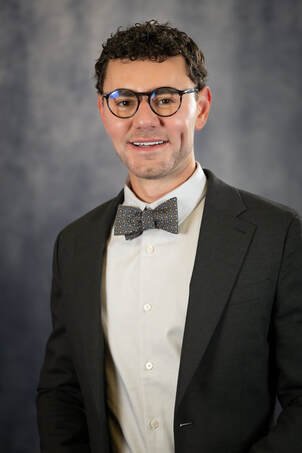
Jonathan Lambert-Melton
Questionnaire Responses
1. Public Employee Living Wage Commitment: As a county chapter of the Progressive Caucus of the North Carolina Democratic Party, we require all candidates seeking our endorsement to pledge to advocate for and ensure that public employee salaries meet or exceed a living wage. Please read and sign the pledge here before continuing your endorsement application: https://www.pcncdp.org/pledge. Once you have signed the pledge, please indicate doing so below:
a. [I have signed the Public Employee Living Wage Pledge!]
b. [I have chosen not to sign the Public Employee Living Wage Pledge at this time.]
Do you support placing limits on the size of campaign donations for candidates running for positions on the Wake County Commission? If so, what should be the maximum amount for all categories of donations? Additionally, have you accepted contributions from the real estate industry or its executives? If yes, from which entities, and why did you accept those contributions? Please explain your position and reasoning.
Yes, I believe a $1,000 maximum donation is appropriate for a large county.
Yes, I have received contributions from folks in the real estate industry, and I want to be very clear about this: I am proudly pro-housing and fully supportive of zoning reform, density, and legalizing housing in more areas. I believe the housing shortage is a central driver of inequality, displacement, and economic insecurity in Wake County, and some real estate professionals have supported my campaigns because of my position on that issue.
However, when I’ve received a higher-dollar or controversial contribution that could reasonably concern voters, I have not simply refunded it; instead, I have reallocated those funds to advance progressive causes. For example, in 2024 I received $6,800 from a developer and sent every dollar of it to the Democratic education candidate Mo Green, because strengthening public education is core to my values and that developer supported the opponent.
How will you ensure that the County fully funds public schools, universal preschool, provide a living wage for support staff and supplement the salaries for teachers to provide a living wage for Wake County? What strategies would you use to address funding gaps and prioritize equity in education?
Public education is Wake County’s most important investment. The General Assembly has disregarded their duty to fund public education, and the gap is falling on the county. I am fully committed to maintaining and expanding the county’s funding of WCPSS, prioritizing support staff wages, committing to long-term capital planning, and expanding access to universal preschool. My mom is a public educator at a Title 1 school, and I’ve seen firsthand the importance of these resources.
How will you allocate county funds to provide full coverage for community college education for high school graduates, and how will you prioritize workforce development programs, including clean energy and other high-demand sectors, to ensure equitable access and good-paying jobs?
Wake County is fortunate to have Wake Tech, arguably the best community college in the country. We must remain good partners and allocate the resources they need to provide education and training to our community. As the County works to recruit new businesses, like clean energy jobs, those companies should hire locally. Workforce development opportunities provided by Wake Tech can prepare folks for those jobs, and we must ensure that Wake Tech has the funding the need through the county annual operating budget, bonds, and grants.
How will you utilize county funds to establish, expand, and fully fund Mobile Crisis services routed through Public Safety Telecommunicators and Call-Takers. to respond to mental health and substance use issues, and what steps will you take to ensure these services are accessible countywide?
I started this work on the Raleigh City Council in 2019, and we have established the Raleigh CARES program. This model should be scaled countywide. I would work to help each municipality in Wake County understand the benefits of an alternative response model, and seek their buy-in, both through support and funding. If the County leads the efforts, and each town joins in, we can easily ensure these services are accessible countywide.
Do you support placing a bond referendum on the next Wake County ballot to fund solar panel installation on public buildings? How will you also use county funds to address affordable housing preservation, promote mixed-income developments, and advance climate resilience in vulnerable communities? Why or why not?
Yes, I support a bond referendum to fund solar panel installation on public buildings. I also think we should do more to help residents fund solar panels on their homes, through the Solarize the Triangle Program; we did this in Raleigh as a pilot in 2022, and it should receive more countywide funding.
Wake County has a goal to build or preserve 2,500 affordable units by 2029. I support this goal, but we need more units. The county owns a lot of land, some of it in amenity-rich areas, that is sorely underutilized. For example, they own a large lot in downtown Raleigh where they park their service vehicles. That land should be used for affordable housing. Also, building more density in our existing urban areas reduces sprawl, which preserves green spaces and advances climate resilience. We can do this by working with the towns in Wake County to up-zone land in their urban areas and along transit. Raleigh can’t be the only city in Wake doing it.
How will you support the establishment of a local Truth and Reconciliation Commission, and what specific topics or systemic issues should it examine to promote racial equity and community healing?
If this is a board/commission that would require a vote by the County Commissioners to establish it, I would vote in favor. In Raleigh, our boards and commissions receive an annual stipend/budget, and I would also support allocating appropriate funds to the Truth and Reconciliation Commission so they have the resources needed to do their work. Regarding topics and issues, I actually think the Commission should have the autonomy to decide these points on their own, without influence or direction from the County Commissioners. In Raleigh, our boards and commissions present annual work plans, where they propose their topics for the year, and I think this works well. One topic that I would suggest, if asked, would be disparity in contracts within the County Government. How do we implement a disparity study to ensure an appropriate level of MWBE participation?
How will you allocate resources to fully fund County Health and Human Services programs, with attention to preventive care, substance use treatment, and reducing health disparities among marginalized populations?
I am a member of the WakeMed Community Advisory Board, and I fully understand the importance of funding health and human services programs. The county presently allocates funds for health and human services from several sources, including local property tax revenue, pass through funding from the State and Federal government (Medicaid, SNAP, etc.) and grants. We know going into next year that certain Federal sources are going to remain at risk, like SNAP, so we have to work harder to make sure more of the remaining money is targeted to the organizations already doing the work to reduce health disparities, particularly among marginalized populations, in our community. I would support increasing the grant funding opportunities available to these organizations.
How will you ensure that Wake County’s budget and policy decisions are transparent and that residents have meaningful opportunities to participate in governance, particularly communities historically excluded from decision-making?
Wake County hasn’t established a Participatory Budgeting program, like we established in Raleigh. I would advocate that Wake County start a Participatory Budgeting program, where members of the community have direct say and influence on how certain funds are spent. I also believe that the budgeting process should begin earlier, to provide ample transparency and participation. The County can do budget listening sessions in various places, meeting people where they are.
How will you ensure that professional and family caregivers are paid a living wage, programs supporting elders and persons with disabilities are fully funded and accessible, and that low-income seniors are protected from excessive utility costs (for example, through automatic circuit setters or other measures)? Please explain your approach and reasoning.
For paying caregivers a living wage, I would use the tools within my control as a County Commissioner, our budget and contracts. For example, making sure there’s a living wage standard in County-funded contracts and prioritizing vendors with strong pay and benefits for their caregivers. To support our elders and persons with disabilities, I will make sure these programs are fully funded and that the intake process is simple and available in multiple languages. Regarding utility costs, we’re a bit limited in what we can do at the County level, for example, we can’t set utility rates, but there are other ways we can reduce the cost burden of utilities, like funding the Solarize the Triangle program and funding energy assistance programs.