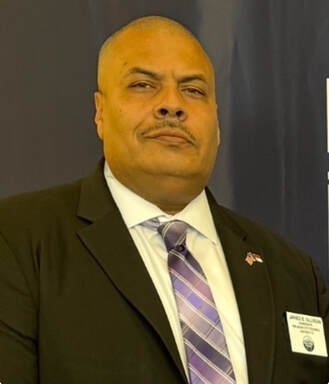
Jared Ollison
Questionnaire Responses
1. Public Employee Living Wage Commitment: As a county chapter of the Progressive Caucus of the North Carolina Democratic Party, we require all candidates seeking our endorsement to pledge to advocate for and ensure that public employee salaries meet or exceed a living wage. Please read and sign the pledge here before continuing your endorsement application: https://www.pcncdp.org/pledge. Once you have signed the pledge, please indicate doing so below:
a. [I have signed the Public Employee Living Wage Pledge!]
b. [I have chosen not to sign the Public Employee Living Wage Pledge at this time.]
In addition to the Living Wage Pledge, do you support a living wage for all part-time and seasonal city workers, and believe the city should cover healthcare premium costs? Why or why not?
Yes, Living wages and corresponding health insurance should be a standard for all persons. A living wage and health insurance should be a right, not an option!
Do you support placing limits on the size of campaign donations for candidates running for Raleigh City Council? If so, what should be the maximum amount for all categories of donations? Additionally, have you accepted contributions from the real estate industry or its executives? If yes, from which entities and why did you accept those contributions? Please explain your position and reasoning.
Yes, I support placing limits on campaign contributions. I think it should be capped at approximately $2,500.00. No, I have not and will not accept campaign contributions from realtor executives, developers, or any persons in a related occupation. I recognize that those persons often make campaign contributions with the expectation that the elected official make favorable decisions for their contribution, quid pro quo! I have turned down several contributions from related professionals and will continue to do so, indefinitely.
What is your overall strategy to increase housing supply while maintaining long-term affordability and preventing displacement?
I think it is best to focus on both affordable housing and affordable home ownership opportunities for qualifying families. Instead of exclusively building apartment complexes, build condominium complexes where the families are able to create generational wealth instead of making developers wealthy.
What requirements should the City impose on large developers to ensure they contribute to affordable housing, sidewalks, transit access, schools, and other community infrastructure?
The city should increase impact taxes on the developers to be sure the funds are adequate to cover these costs.
What zoning or land-use changes do you support to reduce sprawl, preserve naturally occurring affordable housing, and promote transit-oriented development?
The city of Raleigh needs to slow city growth. It is best to limit development in communities that are already under siege due to gentrification and tax increases. Additionally, the city needs to stand behind its agreements. For an example, the city assured the citizens in North Hills that there was a cap on how many stories a building could be, now they have abandoned that commitment in favor of developers’ request. This is unacceptable. Upholding these agreements would preserve naturally occurring affordable housing while fostering an environment for transit-oriented development.
What role should public investment play in preserving existing affordable housing and creating new units, and how should these investments address climate risks?
Any form of public financed development should come with a proportionate impact tax that goes towards preserving affordable housing. The city should then use some of those funds to redevelop or build new city-funded affordable housing opportunities. These properties could be required to be constructed in part by recycled materials and have some solar power requirements.
Do you support placing a bond referendum on the Raleigh ballot to fund solar installations on public buildings and reinvest savings into public services and worker pay? Why or why not?
Yes, investing in solar power for public buildings is prudent. Yes, I support directing savings to salaries and benefits for city employees.
What actions will you take to improve public transportation, address climate impacts in vulnerable neighborhoods, and support equitable economic development for workers and small businesses?
I would like to see a transit police unit created. When public transportation is safe, the employees and the public are safe. I would like to see all city transportation fueled by electricity or bio-fuel. When citizens can ride safe and clean buses, they will utilize public transportation to businesses in their and other communities, allowing small businesses to thrive.
How will you ensure that Raleigh’s city government maintains transparency in budget and policy decisions, provides meaningful opportunities for community engagement, and actively involves residents—particularly historically excluded communities—in shaping city priorities? Please provide specific strategies or initiatives you would implement.
When elected, I will be the only full-time city councilman as I will be retired in June of 2026. This will allow me to spend more time holding community-based meetings to listen to the community’s needs and utilize those concerns to help develop policy. Currently, the city council has very LIMITED engagement with their constituents which seems to be intentional. I will work to develop policy with all citizens in mind, not just the select few. I will meet the citizens at my kitchen table or theirs, lets talk!