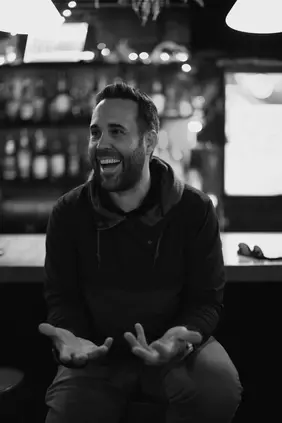
Clark Rinehart
Questionnaire Responses
1. Public Employee Living Wage Commitment: As a county chapter of the Progressive Caucus of the North Carolina Democratic Party, we require all candidates seeking our endorsement to pledge to advocate for and ensure that public employee salaries meet or exceed a living wage. Please read and sign the pledge here before continuing your endorsement application: https://www.pcncdp.org/pledge. Once you have signed the pledge, please indicate doing so below:
a. [I have signed the Public Employee Living Wage Pledge!]
b. [I have chosen not to sign the Public Employee Living Wage Pledge at this time.]
In addition to the Living Wage Pledge, do you support a living wage for all part-time and seasonal city workers, and believe the city should cover healthcare premium costs? Why or why not?
Yes, I support a living wage for all city workers – including part-time and seasonal employees – and believe the city should cover healthcare premium costs where feasible.
Employees doing essential work should not be forced to choose between healthcare, rent, and groceries. Providing fair pay and healthcare reduces turnover, improves service quality, and, ultimately, saves taxpayers dollars by lowering recruitment and training costs.
From my perspective, competitive compensation will go a long way in ensuring more city employees along with their families are able to live and flourish in the city that they serve, rather than having to commute in from surrounding areas.
Do you support placing limits on the size of campaign donations for candidates running for Raleigh City Council? If so, what should be the maximum amount for all categories of donations? Additionally, have you accepted contributions from the real estate industry or its executives? If yes, from which entities and why did you accept those contributions? Please explain your position and reasoning.
Yes, I support reasonable limits on campaign donation sizes to reduce the influence of large donors and build back public trust. I’m running to be a public servant because I want Raleighites to trust their elected officials (and check the receipts!) and know that they are working for the collective good – not just the good of a small, select few.
Therefore, I would support a lower, uniform cap across all donor categories set by the City of Raleigh or General Assembly if authorized. Donation caps can help level the playing field for all candidates in races, especially when large donations from developers, in particular, create suspicion and are often problematic.
I believe transparency is critical in the public sector at all levels. I disclose all contributions fully and support clear reporting requirements. I evaluate any contribution – regardless of industry or amount – based on whether it aligns with my values and independence as a policymaker. No donor receives special treatment, and my decisions will always prioritize Raleigh residents.
I am committed to a Raleigh that supports workers, families, and businesses – one that grows responsibly, governs transparently, and invests in a fair and sustainable future.
What is your overall strategy to increase housing supply while maintaining long-term affordability and preventing displacement?
Raleigh must build more housing, at all income levels, while protecting existing residents. Homelessness and housing insecurity are a housing (supply) problem. So, I’m running on an “Abundance” agenda and believe the city must make it easier to build housing of all types in more places.
My strategies to get this done will include:
(1) working to increase more density citywide to relieve upward pressure on rents,
(2) preserve naturally occurring affordable housing in as many places as possible,
(3) pairing growth with tenant protections and anti-displacement tools, and
(4) aligning housing policy with transit, jobs, and climate resilience.
I will also point residents to expanded partnerships for free legal assistance and appropriate tax relief support for lower- or fixed-income Raleighites, especially those who are facing eviction or similar housing issues.
From my perspective, it is vital that supply and affordability move together.
What requirements should the City impose on large developers to ensure they contribute to affordable housing, sidewalks, transit access, schools, and other community infrastructure?
Development in the City of Raleigh should always involve mutual benefit. The City of Raleigh should consistently negotiate outcomes that serve the public good, first and foremost, not simply private gain.
Large developments should contribute their fair share through affordable housing set-asides (ideal) or in-lieu fees, fund sidewalks, bike infrastructure, and transit access along with investments in green spaces and utilities when impacts are created.
Growth should pay for growth.
What zoning or land-use changes do you support to reduce sprawl, preserve naturally occurring affordable housing, and promote
transit-oriented development?
I believe we need more housing, more choices, more places. We must create a more walkable and denser urban core with better connectivity to everyday essentials and vibrant small businesses that are run and owned by neighbors.
That means, I would support:
(1) missing-middle housing (duplexes, quadraplexes, townhouses, ADUs, smaller apartments, etc.) ideally near transit and jobs,
(2) transit-oriented development along our major corridors,
(3) limit surface or retail parking where efficient transit exists, and
(4) stronger protections for existing affordable housing.
What role should public investment play in preserving existing affordable housing and creating new units, and how should these investments address climate risks?
Public investment is essential to both preserve and create affordable along with attainable housing. The City of Raleigh should work to rehabilitate (or, when appropriate acquire) existing affordable units, partner with nonprofit and mission-driven developers to activate city assets, require climate-resilient construction standards (but not become exorbitant), and prioritize investments
outside floodplains and in energy-efficient buildings to lower utility costs for residents.
I also think that the public sector needs to engage nonprofit asset owners (like churches, which own a significant amount of land in the City of Raleigh along with holding a privileged tax class), especially in the urban core, to produce more affordable and attainable housing units. This is where we can make a significant difference in the next 5 – 10 years on our overall affordable housing stock.
Do you support placing a bond referendum on the Raleigh ballot to fund solar installations on public buildings and reinvest savings into public services and worker pay? Why or why not?
Yes, I would support placing a bond referendum on the ballot to fund solar installations on public buildings – provided it is financially sound and transparent. I believe it is imperative to communicate the financial metrics and expected outcomes for the project along with the anticipated return on investment to the community.
Solar investments can lower long-term energy costs, reduce emissions, and create savings that can be reinvested into important public services and worker pay. Done responsibly, this is a win for taxpayers, workers, and the climate.
I was fortunate to invest in solar at my family’s home and have personally seen the benefits.
What actions will you take to improve public transportation, address climate impacts in vulnerable neighborhoods, and support equitable economic development for workers and small businesses?
As a Councilor, I will pursue an integrated approach that connects transportation, climate resilience, and economic opportunity. At this moment, most of the City of Raleigh is car dependent, making personal vehicles a necessity for everyday residents, which is something Raleigh must change as we grow.
Several actions I will pursue include: (1) continuing to expand frequent, reliable bus service – especially connecting workers to jobs, (2) prioritizing sidewalks, bike lanes, and transit investments in historically underserved neighborhoods, (3) funding heat-mitigation, flood prevention, and tree canopy projects where climate impacts are greatest, and (4) supporting small businesses and workers through targeted grants, technical assistance, and local hiring policies tied to city investments.
From my view, equity means meeting people where they are and investing where the needs are the greatest. However, real justice and equity cannot be achieved without robust community input and guidance.
How will you ensure that Raleigh’s city government maintains transparency in budget and policy decisions, provides meaningful opportunities for community engagement, and actively involves residents—particularly historically excluded communities—in shaping city priorities? Please provide specific strategies or initiatives you would implement.
Integrity, transparency, and community engagement are very important to me. I will push for plain-language budgets and online tools that clearly show how the city dollars are spent. In addition, I will push for earlier and more meaningful community input before major rezonings and budget decisions.
Traditional town halls can be effective, but I would also like to see more interactive forms of community engagement like charrettes and other hands-on planning processes. Another strategy that I’d like to pursue is canvassing neighborhoods that are affected by major rezonings and hosting multiple meetings – at varied times and days for those who work 9-5 – to ensure we hear from as many residents as possible about the case. As a parent, I’d love to see onsite childcare provided, as much as possible, to encourage participation as well.
In terms of budgeting, I think it is critical to ensure that any proposed municipal tax increases are clearly communicated. This would increase residents’ overall understanding of where their money is being spent.
In my opinion, community engagement and transparency should be ongoing efforts – not limited to election season or formal hearings.