
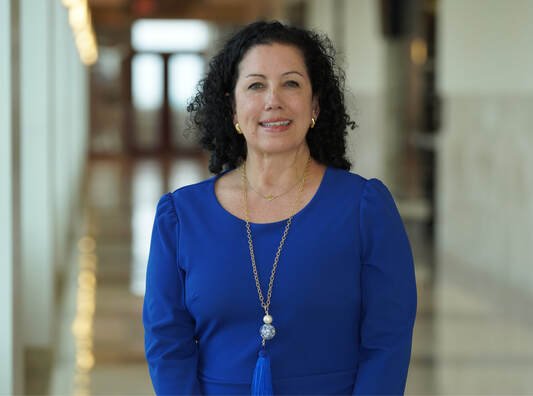
Melanie Shekita
Questionnaire Responses
1. Public Employee Living Wage Commitment: As a county chapter of the Progressive Caucus of the North Carolina Democratic Party, we require all candidates seeking our endorsement to pledge to advocate for and ensure that public employee salaries meet or exceed a living wage. Please read and sign the pledge here before continuing your endorsement application: https://www.pcncdp.org/pledge. Once you have signed the pledge, please indicate doing so below:
a. [I have signed the Public Employee Living Wage Pledge!]
b. [I have chosen not to sign the Public Employee Living Wage Pledge at this time.]
Will you use your prosecutorial discretion to support the elimination of cash bail and unnecessary pretrial detention, allowing exceptions only for violent crimes, flight risks, or serious mental health concerns? Why or why not?
I currently serve as President of the Board of Criminal Justice Alternatives (CJA). Since 2022, CJA, in collaboration with Wake County partners, has implemented initiatives designed to expand alternatives to pretrial detention.
Rather than eliminating cash bond, we have adopted the use of a Pretrial Services Assessment—an individualized, evidence-based risk assessment conducted for all individuals, to better inform pretrial release decisions while maintaining public safety.
We have quadrupled supervision capacity outside the detention facility. We have also added an Assistant Public Defender to advocate for defendants at first appearance hearings. Judges are now routinely provided the option to set a higher secured bond without monitoring or a lower secured bond with supervision and monitoring.
The result is a system that allows for less restrictive conditions for non-violent offenders while continuing to promote court appearance, accountability, and public safety.
How would you prioritize early release or alternative resolutions for individuals with remaining sentences for minor offenses to reduce jail overcrowding and promote equitable outcomes?
In 1995, the General Assembly reformed sentencing laws to ensure that both crime victims and offenders could rely on the sentence imposed by the court. I do not support reducing sentences solely as a means of decreasing jail populations, particularly where victims have a right to be present and heard.
Instead, I would focus on expanding diversion programs for appropriate non-violent offenses at the front end of the system. These evidence-based programs help reduce jail populations while emphasizing accountability, rehabilitation, and the reduction of recidivism, without undermining victims’ rights or public safety.
How will your office prioritize non-prosecution and ensure the expungement of prior marijuana convictions, including supporting vacating these convictions if state law changes?
In 2020, the General Assembly passed the Second Chance Act, allowing for the expunction of certain lower-level felonies. As District Attorney, I would not prioritize prosecution of simple marijuana possession, and I support existing drug diversion programs for first-time offenders.
I would also faithfully enforce any laws enacted or amended by the General Assembly, as required by my role.
How will you use charging and diversion policies to reduce mass incarceration and dismantle the school-to-prison pipeline?
One of my top priorities is working with community stakeholders to address the rise in juvenile violent crime. This is not an issue the District Attorney’s Office can address alone; it requires collaboration with the school system, law enforcement, and other community partners.
Early intervention will be key to reducing future incarceration. Strengthening our existing Teen Court and Restorative Circle programs, along with expanding other diversion initiatives, will also help keep non-violent offenders out of Juvenile Court.
I would also advocate for the investigation and possible prosecution of offenders who put guns in the hands of minor children.
What specific policies would you implement to address racial disparities in charging, sentencing, and incarceration?
It should go without saying that racial bias has no place in charging, sentencing, or incarceration decisions. To build and maintain public trust in this principle, I support expanding pretrial diversion programs for first-time, non-violent offenders.
I also support the systematic collection and analysis of prosecutorial data within the Wake County District Attorney’s Office to promote transparency, accountability, and the identification of any potential disparities.
How will your office ensure police and sheriff deputies are held criminally accountable for misconduct, including failure to intervene in lethal incidents or violations of internal policies (e.g., body camera use)?
As District Attorney, the law will be applied equally to everyone in Wake County—civilian and law enforcement alike. After 27 years working with law enforcement, I can say without hesitation: no one is more angered by a bad cop than the officers who uphold the badge with integrity.
There is an important distinction between criminal conduct and violations of internal police policy. I would advocate increased awareness and training around the sensitivity of use-of-force decisions, with a strong emphasis on de-escalation, particularly in situations involving mental health crises.
How will your office handle cases involving civil disobedience to protect assembly rights while ensuring both civilian and police violations are addressed under the law?
As District Attorney, it is my job to uphold the rights guaranteed under the First Amendment and the laws of the State of North Carolina.
How will you use prosecutorial discretion to protect undocumented victims and reduce immigration consequences stemming from minor offenses?
The job of the District Attorney is to enforce the laws of North Carolina fairly and equally. Where you were born or which part of the county you call home should never determine how the law is applied, you will receive equal protection under the law.
Our office currently supports U-Visa requests for victims of crime who lack lawful immigration status. As District Attorney, I would continue this practice to ensure victims are protected and encouraged to come forward without fear of immigration-related consequences.
How would you pursue accountability for corporations whose actions knowingly harmed the environment or public health, including local or state-level legal remedies? Additionally, have you accepted contributions from large corporations or their executives? If yes, from which entities and why did you accept those contributions? Please explain your position and reasoning.
The laws of the State of North Carolina apply equally to all citizens, including corporations. When warranted, I will conduct a full investigation and take appropriate action, up to and including criminal prosecution.